Most Frequently Asked Questions About Islam
The most frequently asked “50 questions about the Religion of Islam” and their short answers by those who do not know Islam but are curious about it
1. What is Islam?
Islam means peace. Its literal meaning is peace. It is a religion of peace. The religion of Islam, on the other hand, is a religion based on belief in a single God and accepts Muhammad as the last prophet.
2. Who is a Muslim?
A person who believes in Islam, which is a monotheistic religion, and submits to Allah is called a Muslim. A Muslim believes in a single God and applies His message, the Quran, to their life.
3. Who is the God of Islam?
In Islam, God is called “Allah” and is considered single, unique, and peerless.
4. Is Islam a monotheistic religion?
Yes, Islam strictly advocates the belief in one God. God is single, unique, peerless, and the sole ruler of the universe. He has no partners or helpers. Islam does not accept the belief of those who associate partners, helpers, or other powers like Him with God. In Islam, associating partners with God is the greatest sin.
5. Who is Muhammad?
Muhammad is the last prophet of Islam. He is the last messenger sent by God from among human beings. The messages were sent to Muhammad through the angel named Gabriel.
6. Do Muslims believe in Jesus?
Yes, Muslims accept Jesus as a prophet.
7. What is the Quran?
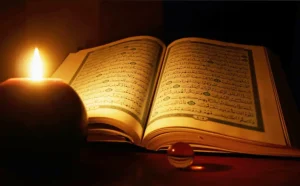
The Quran is the revelation sent to people by Allah through the angel Gabriel, containing divine messages for humanity. It is the holy book of Muslims.
8. What is prophethood?
Prophethood is the duty of messengership that conveys Allah’s message to people.
9. Do angels exist?
According to Islamic belief, angels are invisible and genderless beings created by Allah. They are beings without free will. They only fulfill God’s commands and the duties He assigns.
10. What is destiny?
Destiny means measure and order. Destiny is the belief that Allah knows everything and creates it in an order. Allah knows everything past and future. He has given humans the capacity of free will (preference, choice). Humans are responsible for their choices and actions.
11. Why is prayer performed 5 times a day?
Prayer is performed five times a day to worship and show devotion to Allah.
12. How is prayer performed?
Prayer is performed with specific movements and supplications at designated times. Allah is prayed to by standing, bowing, prostrating, and sitting.
13. Why is fasting observed?
Fasting is observed to increase patience, discipline, and the consciousness of solidarity. It is a command of Allah.
14. What is Ramadan?
Ramadan is the holy month in which Muslims fast.
15. What is Zakat?
Zakat is a compulsory charity given to those in need from one’s surplus wealth. According to Islam, every wealthy person must give a portion of their wealth, even if small, to the poor and needy.
16. What is Hajj?
Hajj is a pilgrimage that Muslims perform for Allah by going to Mecca, where Prophet Muhammad historically lived.
17. Why is alcohol forbidden?
Allah has forbidden it. In Islam, alcohol and drinks that negatively affect the mind and health are prohibited.
18. Why is pork forbidden?
Pork is forbidden by Allah.
19. Why is Friday prayer important?
Friday prayer holds a special importance as a weekly congregational worship on Friday at noon.
20. Is supplication (dua) mandatory?
Supplication is considered worship; Allah considers it valuable, but it is not mandatory.
21. What is the status of women?
In Islam, women are considered an important part of society. In the Quran, the name of a chapter is Nisa, which means the Chapter of Women.
22. Why is the headscarf worn?
The headscarf is associated with religious belief and the concept of modesty.
23. Why does polygamy exist?
In Islam, extramarital and secret relationships are forbidden. Under certain conditions and in limited numbers, marriage is allowed.
24. Can women go to the mosque?
Yes, women can go to the mosque. They can worship in mosques.
25. How does divorce happen?
Divorce is possible within the framework of certain rules. In Islam, divorce is easy, but the divorcing party must fulfill their obligations.
26. Are men and women equal?
In Islam, men and women are considered equal in value but with different roles. A pair of shoes is equal, but you cannot wear the right shoe on the left foot. Imposing the duties of a man onto a woman, or the duties of a woman onto men, is not in accordance with creation. There is no difference in terms of responsibility before Allah. Both women and men are equally responsible to Allah, His commands, and prohibitions.
27. Is there forced marriage?
Forced marriage is not appropriate according to Islam. The consent and approval of both parties are required for marriage. If there is no mutual consent, that marriage is not considered valid.
28. Can women work?
Yes, women are allowed to work.
29. Why is family important?
Family is viewed as the fundamental structure of society.
30. Why is inheritance different?
Inheritance distribution is regulated according to specific responsibilities.
31. What is Sharia?
Sharia is a set of legal and moral rules created by religious experts based on the religion of Islam.
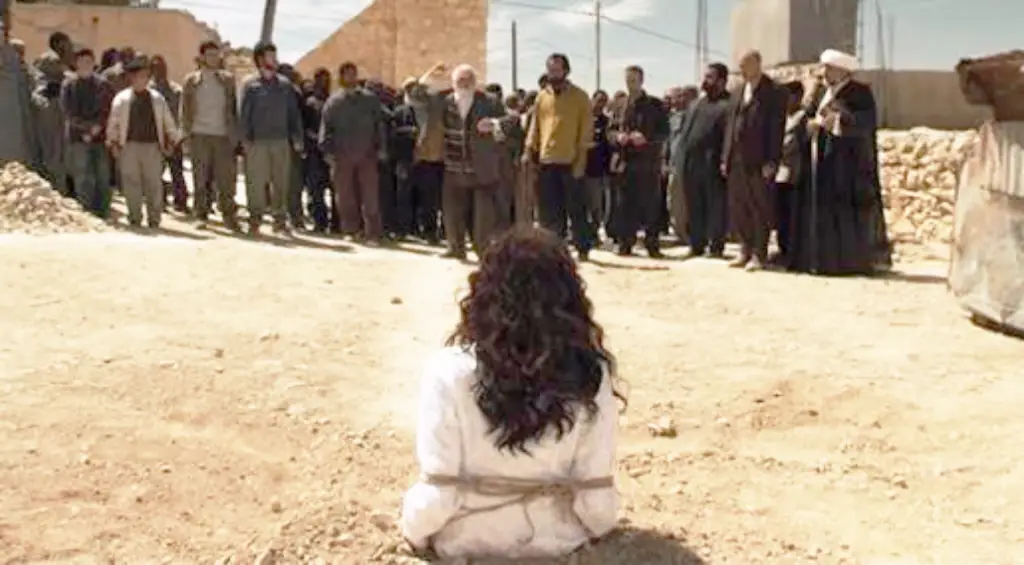
32. Are there harsh punishments?
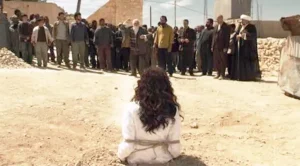
In Sharia, certain punishments are prescribed for some crimes. Punishments are preventive and deterrent against committing crimes. Justice is paramount.
33. What is the punishment for theft?
Under certain conditions, for example, for thefts out of non-necessity, severe penal sanctions are prescribed, such as amputation of the hand.
34. Is it applicable today?
Islam is the most suitable religion for human nature and possesses applicable practices. The commandments of Islam are for the benefit of individuals and humanity, while its prohibitions are to the detriment of individuals and humanity. Examples: Commandments such as giving charity (zakat), doing good, and being truthful are for the benefit of people and humanity. Actions such as murder, theft, lying, backbiting, oppression, and injustice are prohibited, to the detriment of humanity.
35. Is there a punishment for leaving the religion?
There is no punishment for leaving the religion. The book of Islam, the Quran, has left people free in matters of religion. The Prophet had no such practice. The practices of subsequent generations do not represent the religion. In Islam, killing a person is the greatest sin after associating partners with God. To claim there is a punishment for leaving the religion based on the culture of narration with evidence containing speculation is contrary to the spirit of Islam.
36. Is it compatible with democracy?
Islam takes consultation as a basis, as in all matters. Although there are similarities, they are not exact equivalents.
37. Does it conflict with secularism?
It depends on the definition of secularism. Islam takes freedom of religion and conscience as a basis. Anyone can believe in whatever they want. Every believer of any religion is free to practice their faith. Historically, mosques and churches have stood side by side.
38. Are there rules of war?
There are ethical rules regarding war in Islam. Islam’s commands on war are for defensive and protective purposes.
39. What is Jihad?
Jihad is the effort made, the activities carried out along this path, to remove obstacles that prevent the message of Islam from reaching people.
40. Is there a link to terrorism?
Islam does not support terrorism; it forbids all kinds of terrorism. Allah’s book, the Quran, does not allow this. However, some extremist religious individuals and groups making different interpretations for such actions and deviating from the purpose is the problem of those individuals and groups.
41. What is the view on other religions?
Islam accepts the existence of other religions.
42. What is the view on Jews and Christians?
They are accepted as “People of the Book”. They are considered closer compared to other religions.
43. Does it contradict science?
Islam does not contradict science.
44. What about the theory of evolution?
Allah explains that He created humans from clay and the subsequent evolutions. There is not enough evidence to oppose evolution.
45. Does it adapt to the modern world?
This subject varies according to different perspectives.
46. What does it say about LGBT?
In the Quran, Allah does not welcome such actions and uses condemnatory language.
47. Are art and music forbidden?
Generally, they are not forbidden.
48. Is there humor and entertainment?
Yes.
49. Why do sects exist?
In the early periods of Islam, there were no sects. They were formed at least a century later due to different interpretations and understandings.
50. Why did it spread quickly?
It is the religion most suitable for human nature. In addition to this, the exemplary characters of the early Muslims and many historical, social, and cultural factors were influential.

Post Comment
You must be logged in to post a comment.